The Best Time to Stargaze in Jasper
A July night this far north never really gets dark. October gives you black sky at a civilised hour — which is why the same tour is a different experience by season.
Most “best time to visit Jasper” advice is about hiking, wildlife and lake colour, and it points at July. For the night sky, that advice is close to inverted.
The thing about latitude
Jasper sits far enough north that midsummer nights do not get properly dark. Astronomical darkness — the real black sky that astronomy needs — is squeezed into a narrow window in June and July, and arrives absurdly late when it arrives at all.
Come back in October and the sky is genuinely black by a reasonable evening hour. Same preserve, same telescopes, different night entirely.
This is why tour start times move so much across the season. They follow sunset, not a timetable, which is also why we do not print them here: a July slot and an October slot are hours apart, and the only reliable version is the one shown against your date at booking.
The honest ranking
Autumn — the best. September and October give real darkness early, cool stable air, and thinner crowds than midsummer. October is also the park’s Dark Sky Festival month.
Winter — the darkest, and the hardest. Long nights and often superb transparency. It is also genuinely cold at a standstill outdoors at altitude, which is a bigger factor than people expect when the activity involves standing still.
Spring — underrated. Darkness returns to sensible hours, prices and crowds have not, and the weather is improving.
Midsummer — the weakest for astronomy, the best for everything else. If your trip is in July, go anyway. Just understand you are buying the guides, the telescopes and the dome rather than a deep dark sky, and pick your expectations accordingly.
Two things that are not in the forecast
Wildfire smoke. Western Canadian summers can carry smoke that leaves a technically clear sky useless for astronomy. It is a real seasonal risk and no rain forecast shows it.
The moon. A full moon washes out faint objects far more than most first-time stargazers expect. Planets and the moon itself are unaffected — genuinely spectacular through a telescope — but the Milky Way is not. If you have a choice of dates, the darker half of the lunar month is the better one, and it is free to arrange.
The Dark Sky Festival
Jasper runs a Dark Sky Festival every October, built around the preserve. Talks, guided observation and public science, run by the park and its partners rather than by any single tour operator.
It is the best week of the year to be here for this, and it is separate from anything sold on this page. Dates move from year to year — check the festival’s own site rather than a page like this one. A festival date that is a week stale is exactly the kind of error that ruins a trip built around it.
If your dates are already fixed
They usually are, and that is fine. The season changes how dark the sky gets; it does not change whether the tour is worth doing.
The combo is the ticket that holds up across all of them, because the dome half is season-proof and weather-proof.
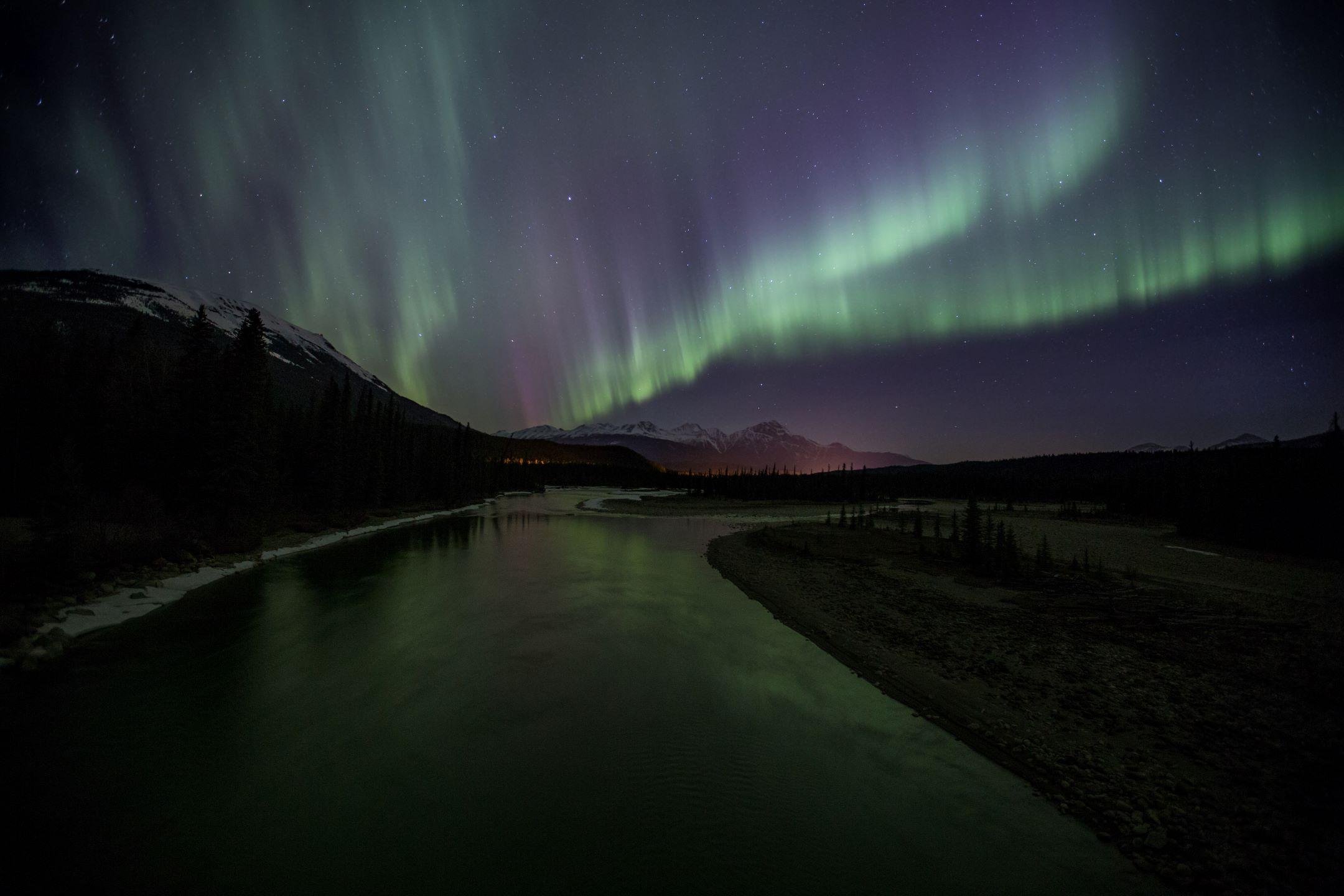
Next: what happens if it clouds over, which matters more than the month, and whether you will see the northern lights, where the honest answer is less encouraging than most pages admit.
Book the Combo Before the Clear Nights Go
The Planetarium and Telescope Combo is the one most people should book: the dome theatre and the telescopes on one ticket, from about $61, rated 4.0/5 by 144 verified guests. Free cancellation, and the operator has a stated plan for clouded-out nights.
Check Availability & Book